Generation 1
Congratulations!
You are now the caretaker for a genuine Tamagotchi. Tamagotchi is a cyber creature who has travelled millions of miles from its home planet to learn what life is like on Earth. Let me explain how to care for your Tamagotchi.
 Hover over them!
If you see their Hunger bar emptying in the Health Meter, you'll have to give them meals. But be careful not to overfeed them; if you do, they'll refuse to eat.
Snacks are also tempting. They'll raise your Tamagotchi's happiness, but be careful or they'll get sick!
If you see your Tamagotchi inside their bed, it's time for you to turn the light off for them. Don't worry about turning it on again in the morning; they can do that by themselves.
Different species have different schedules, so make sure you don't ignore their call as sleep is very important for their health.
If you see their Happiness bar emptying in the Health Meter, you'll have to Play with them. Try to guess which direction your Tamagotchi will turn. If you get it right at least 3/5 rounds, their happiness will increase.
Playing is also a great way to keep your Tamagotchi at a healthy weight, especially if they've been eating one too many snacks!
Sometimes your Tamagotchi will get sick. When this happens, a skull will appear next to them. Give them as much medicine as they need to cure them (sometimes it'll take 2-3 injections).
When they fall sick, they won't call for your attention, so make sure you check them regularly.
Just like real pets, Tamagotchi will poop every now and then. When this happens, use the duck to clean up the mess. Make sure to check them regularly, as they won't call for your attention. If you don't clean it soon, they'll fall sick.
This menu will translate your Tamagotchi's needs into human units and language. Every human day is equivalent to a year for them. If you manage to get them above 23 years you will have done an excellent job, congratulations!
The Hunger and Happiness bars will tell you if you need to feed or play with your Tamagotchi. And the Discipline bar will show how well behaved they are.
As for their weight, each species has an ideal value. Make sure to keep your Tamagotchi at that weight to prevent them from getting sick.
Sometimes your Tamagotchi will misbehave. This can take the form of them calling for your attention even though their Hunger and Happiness bars aren't empty. Other times, they might refuse to eat or play even though the bar is empty.
Either way, in this case you will have to discipline them so they grow into a well-mannered adultchi.
Whenever your Tamagotchi needs your help, they'll beep to get your attention. This icon will also be highlighted in case you didn't hear them, so make sure to check it regularly. It will turn off once their needs are met or if you ignore it for 15 min.

Care
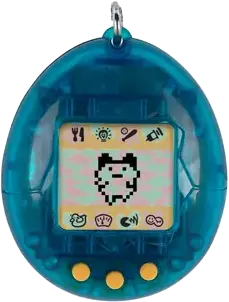
You see that egg-shaped device up there? At first sight it might look like a simple keychain but, in truth, it's a high-tech device designed by professor Banzo and called "Tamagotchi HOUSE". In this first section of the page, we're going to focus on taking care of these wonderful beings but, if you want to know more about them, feel free to check the other tabs as well!
So you want to raise a healthy Tamagotchi, don't you? Well, if you have one of the devices above, you'll be able to communicate with them, so the hardest part is solved, phew! First, you'll have to set its clock to Earth's time. Upon doing so, it'll present you with an egg that will hatch within minutes.
As soon as it hatches, your Tamagotchi will cry for your Attention and, depending on how well you care for them, their health and behavior will be exemplar (or not!). The Health Meter will translate your tamas' needs into a language you can understand so you know what to do at all times. It'll even parse its age and weight to the human measurement systems!

If his Hunger meter goes down, you'll have to Feed them. And for their Happiness meter, you'll have to Play with them. Or give them candy. But be careful to not give them too many or their health will weaken.
Do their call for your Attention for no reason? Or refuse to eat and play even though their Hunger and Happiness meters are empty? Then you are looking at a case of bad behavior. Make sure to Discipline them as needed when that happens, or else they'll grow into an ill-mannered adultchi!
Let's also not forget that, just like you and I they have to...alleviate themselves. Trapped in their little house, they'll do it right there and you'll see a poop next to them. When that happens, the Duck will take care of cleaning their room. Make sure to check them frequently to ensure everything's clean or they'll fall sick.
Last but not least, we all need to sleep too. Their schedule varies depending on the species but, whenever they want to go to bed, they'll call for your Attention. Just turn the Light off to make sure they rest well so they remain healthy. Don't worry about it in the morning, they can turn it on again by themselves.
If you keep all that in mind, you'll be set on the right path to raise a good and healty Tamagotchi! But don't worry, we all make mistakes and, sometimes, your tama will get sick. If that happens, make sure to give them as much Medicine as they need to get that sinister skull out of their house!

If you want to see more details, hover over the different tags in the device image above to check each of them. Otherwise, I'll recommend you check their lore if you want to know how and why these lovely beings got to our planet in their first place.
- Professor Kolala

Controls
If you see their Hunger bar emptying in the Health Meter, you'll have to give them meals. But be careful not to overfeed them; if you do, they'll refuse to eat.
Snacks are also tempting. They'll raise your Tamagotchi's happiness, but be careful or they'll get sick!
LightIf you see your Tamagotchi inside their bed, it's time for you to turn the light off for them. Don't worry about turning it on again in the morning; they can do that by themselves.
Different species have different schedules, so make sure you don't ignore their call as sleep is very important for their health.
PlayIf you see their Happiness bar emptying in the Health Meter, you'll have to Play with them. Try to guess which direction your Tamagotchi will turn. If you get it right at least 3/5 rounds, their happiness will increase.
Playing is also a great way to keep your Tamagotchi at a healthy weight, especially if they've been eating one too many snacks!
MedicineSometimes your Tamagotchi will get sick. When this happens, a skull will appear next to them. Give them as much medicine as they need to cure them (sometimes it'll take 2-3 injections).
When they fall sick, they won't call for your attention, so make sure you check them regularly.
DuckJust like real pets, Tamagotchi will poop every now and then. When this happens, use the duck to clean up the mess. Make sure to check them regularly, as they won't call for your attention. If you don't clean it soon, they'll fall sick.
Health MeterThis menu will translate your Tamagotchi's needs into human units and language. Every human day is equivalent to a year for them. If you manage to get them above 23 years you will have done an excellent job, congratulations!
The Hunger and Happiness bars will tell you if you need to feed or play with your Tamagotchi. And the Discipline bar will show how well behaved they are.
As for their weight, each species has an ideal value. Make sure to keep your Tamagotchi at that weight to prevent them from getting sick.
DisciplineSometimes your Tamagotchi will misbehave. This can take the form of them calling for your attention even though their Hunger and Happiness bars aren't empty. Other times, they might refuse to eat or play even though the bar is empty.
Either way, in this case you will have to discipline them so they grow into a well-mannered adultchi.
AttentionWhenever your Tamagotchi needs your help, they'll beep to get your attention. This icon will also be highlighted in case you didn't hear them, so make sure to check it regularly. It will turn off once their needs are met or if you ignore it for 15 min.
Their Arrival
Hi! My name is Kolala! I'm a researcher that, after finding Banzo's notes regarding Tamagotchi, decided to follow his footsteps in studying these wondrous creatures. And who's Banzo you ask? Why, he's the professor that first studied Tamagotchi decades ago! Back in the day, he and his assistant Mikachu published a book to share their knowledge of them. But! The times have changed and his notes have become near impossible to find.

Worry not! I created this website to share them with everyone so we can all have the joy of meeting and caring for these lovely beings called Tamagotchi!
Let's start from the beginning. Tamagotchi are extraterrestrial beings that came from the Tamagotchi Planet. In there, everything is a living being, including their day-to-day items, such as fridges and TVs. And yes, this also extends to the planet itself.
Long ago, there was an incident in which an Oyajitchi gave sake to the planet, making it drunk. This prompted many Tamagotchi to leave their homeworld because, in its inebriated state, the planet started to sing...and apparently it's terrible at it. So much so, that they jumped into a spaceship and crossed the stars until they crashed into Earth.

Luckily for them, they landed in a river, close to where Banzo and Mikachu were, and the two of them jumped to their rescue. Dr. Banzo realized our atmosphere wasn't adequate for their survival, so he built the device known as Tamagotchi HOUSE. The name was chosen due to its egg-like shape (tamago = egg), later extending it to the species it was meant to house as well.
It seems that, on Earth, Tamagotchi become entities similar to electricity. But, upon entering this device, they become visible, and communication is possible between them and humans. They can still communicate with their own kin through radio waves, but they depend on humans to help them survive in our world.
The original interior of a Tamagotchi HOUSE was often decorated in a rustic style, but preferences always varied depending on each species. As the device evolved overtime, new exteriors and interiors were added to satify all preferences, but we'll discuss those in future Lore pages.

We'll leave the history lesson there. Stay tuned for the next part in future devices, in which we will talk about their planet!
- Professor Kolala
 Hover over them!
- Hatches after 5 min.
- From Babytchi after 65 min.
- 0-2 care mistakes.
- 0-2 discipline mistakes.
- 0-2 care mistakes.
- 3+ discipline mistakes.
- 3+ care mistakes.
- 0-2 discipline mistakes.
- 3+ care mistakes.
- 3+ discipline mistakes.
- 0-2 care mistakes.
- 0 discipline mistakes.
- 0-2 care mistakes.
- 1 discipline mistake.
- 0-2 care mistakes.
- 2+ discipline mistakes.
- 0-3 care mistakes.
- 2+ discipline mistakes.
- 3+ care mistakes.
- 0-1 discipline mistakes.
- 3+ care mistakes.
- 0-1 discipline mistakes.
- 3+ care mistakes.
- 2-3 discipline mistakes.
- 4+ care mistakes.
- 3-7 discipline mistakes.
- 3+ care mistakes.
- 2 discipline mistakes.
- 3+ care mistakes.
- 3-5 discipline mistakes.
- 3+ care mistakes.
- 4+ discipline mistakes.
- 4+ care mistakes.
- 8+ discipline mistakes.
- 3+ care mistakes.
- 3+ discipline mistakes.
- 3+ care mistakes.
- 6+ discipline mistakes.
- No requirements.
- All devices except Japanese ones.
- No requirements.
- Exclusive to Japanese devices.
 Hover over them!
- Hatches after 5 min.
- From Babytchi after 65 min.
- 0-2 care mistakes.
- 0-1 discipline mistakes.
- 0-2 care mistakes.
- 2+ discipline mistakes.
- 3+ care mistakes.
- 0-1 discipline mistakes.
- 3+ care mistakes.
- 2+ discipline mistakes.
- 0-2 care mistakes.
- 0 discipline mistakes.
- 0-2 care mistakes.
- 1 discipline mistake.
- 0-3 care mistakes.
- 0-1 discipline mistakes.
- 0-2 care mistakes.
- 2+ discipline mistakes.
- 0-3 care mistakes.
- 2+ discipline mistakes.
- 3+ care mistakes.
- 0-1 discipline mistakes.
- 0-2 care mistakes.
- 0-2 care mistakes.
- 3+ care mistakes.
- 2-3 discipline mistakes.
- 4+ care mistakes.
- 0-7 discipline mistakes.
- 3+ care mistakes.
- 0-3 discipline mistakes.
- 3+ care mistakes.
- 0-5 discipline mistakes.
- 3+ care mistakes.
- 4+ discipline mistakes.
- 4+ care mistakes.
- 8+ discipline mistakes.
- 3+ care mistakes.
- 4+ discipline mistakes.
- 3+ care mistakes.
- 6+ discipline mistakes.
- 0-5 care mistakes.
- 0 discipline mistakes.
- Raised from Babytchi to Maskutchi with 0% discipline.
- All devices except the Wave 1 Japanese devices (2017).
- 0-5 care mistakes.
- 0 discipline mistakes.
- Raised from Babytchi to Maskutchi with 0% discipline.
- All devices except the Wave 1 Japanese devices (2017).
- 0-5 care mistakes.
- 0 discipline mistakes.
- Raised from Babytchi to Maskutchi with 0% discipline.
- Exclusive to Japanese Wave 1 devices (2017).
- 0-5 care mistakes.
- 0 discipline mistakes.
- Raised from Babytchi to Maskutchi with 0% discipline.
- Exclusive to Japanese Wave 1 devices (2017).
Growth Details
Tamagotchi are creatures that transform as they grow up. The species they become depends on the environment they're raised in, which is why it's so important to take good care of them.
Note there are slight differences depending on the type of device you have, so make sure you're checking the one that applies to your personal Tamagotchi HOUSE. Old devices refer to those originally crafted by Banzo back in 1996. New ones refer to the ones created from 2017 onwards. Besides that, within the new ones, we have two waves: the first one comprises the 2017 devices while the second includes all devices from 2018 onwards.

Last but not least, some Tamagotchi species are endemic of certain regions. This is the case for Oyajitchi and Bill, although the latter has been spotted in newer Japanese devices as well, apparently replacing Oyajitchi in those.
To undestand the growth paths it's also important to know what are care mistakes and discipline mistakes, as well as how they function:
- A care mistake happens when your Tamagotchi is hungry or unhappy and they're not taken care of within 15 minutes of their call. For example, if their Hunger meter reaches zero, they'll call for you. If you don't Feed them within 15 minutes, the Attention icon will turn off and it'll be counted as a care mistake.
- A discipline mistake happens when your Tamagotchi calls for Attention without a reason and they're not disciplined within 15 minutes of their call. For example, if their Hunger and Happiness meters still have two hearts and your Tamagotchi calls you, that'd be a case of misbehavior. Another example would be that they call for your Attention but then refuse to eat or play even if their meters are empty.
- Care and discipline mistakes are cumulative between the child and teen stages. For example, if you made 1 discipline mistake when they were a Marutchi and 0 discipline mistakes when they were a Tamatchi, the total discipline mistakes would be 1. This means they will become a Ginjirotchi upon reaching adulthood.
Especially interesting in these devices are the types one/two in which teens can be divided. Even if they are the same species, the type will define the adults that they can grow into, so pay close attention to the growth path your Tamagotchi is following.
The growth paths are the result of several studies written by researchers all over the world combined with my own personal experience. This means there can be room for improvement as new discoveries are made. I will add any corrections necessary if any errors are reported.
- Professor Kolala
Growth Paths (Original)
- Hatches after 5 min.
- From Babytchi after 65 min.
Type 1:
- 0-2 care mistakes.
- 0-2 discipline mistakes.
Type 2:
- 0-2 care mistakes.
- 3+ discipline mistakes.
Type 1:
- 3+ care mistakes.
- 0-2 discipline mistakes.
Type 2:
- 3+ care mistakes.
- 3+ discipline mistakes.
From Tamatchi (type 1):
- 0-2 care mistakes.
- 0 discipline mistakes.
From Tamatchi (type 1):
- 0-2 care mistakes.
- 1 discipline mistake.
From Tamatchi (type 1):
- 0-2 care mistakes.
- 2+ discipline mistakes.
From Tamatchi (type 2):
- 0-3 care mistakes.
- 2+ discipline mistakes.
From Tamatchi (type 1):
- 3+ care mistakes.
- 0-1 discipline mistakes.
From Kuchitamatchi (type 1):
- 3+ care mistakes.
- 0-1 discipline mistakes.
From Tamatchi (type 1):
- 3+ care mistakes.
- 2-3 discipline mistakes.
From Tamatchi (type 2):
- 4+ care mistakes.
- 3-7 discipline mistakes.
From Kuchitamatchi (type 1):
- 3+ care mistakes.
- 2 discipline mistakes.
From Kuchitamatchi (type 2):
- 3+ care mistakes.
- 3-5 discipline mistakes.
From Tamatchi (type 1):
- 3+ care mistakes.
- 4+ discipline mistakes.
From Tamatchi (type 2):
- 4+ care mistakes.
- 8+ discipline mistakes.
From Kuchitamatchi (type 1):
- 3+ care mistakes.
- 3+ discipline mistakes.
From Kuchitamatchi (type 2):
- 3+ care mistakes.
- 6+ discipline mistakes.
From Maskutchi, evolved from Tamatchi (type 2):
- No requirements.
- All devices except Japanese ones.
From Maskutchi, evolved from Tamatchi (type 2):
- No requirements.
- Exclusive to Japanese devices.
Growth Paths (Re-release)
- Hatches after 5 min.
- From Babytchi after 65 min.
Type 1:
- 0-2 care mistakes.
- 0-1 discipline mistakes.
Type 2:
- 0-2 care mistakes.
- 2+ discipline mistakes.
Type 1:
- 3+ care mistakes.
- 0-1 discipline mistakes.
Type 2:
- 3+ care mistakes.
- 2+ discipline mistakes.
From Tamatchi (type 1):
- 0-2 care mistakes.
- 0 discipline mistakes.
From Tamatchi (type 1):
- 0-2 care mistakes.
- 1 discipline mistake.
From Tamatchi (type 2):
- 0-3 care mistakes.
- 0-1 discipline mistakes.
From Tamatchi (type 1):
- 0-2 care mistakes.
- 2+ discipline mistakes.
From Tamatchi (type 2):
- 0-3 care mistakes.
- 2+ discipline mistakes.
From Tamatchi (type 1):
- 3+ care mistakes.
- 0-1 discipline mistakes.
From Kuchitamatchi (type 1 or 2):
- 0-2 care mistakes.
From Tamatchi (type 1):
- 3+ care mistakes.
- 2-3 discipline mistakes.
From Tamatchi (type 2):
- 4+ care mistakes.
- 0-7 discipline mistakes.
From Kuchitamatchi (type 1):
- 3+ care mistakes.
- 0-3 discipline mistakes.
From Kuchitamatchi (type 2):
- 3+ care mistakes.
- 0-5 discipline mistakes.
From Tamatchi (type 1):
- 3+ care mistakes.
- 4+ discipline mistakes.
From Tamatchi (type 2):
- 4+ care mistakes.
- 8+ discipline mistakes.
From Kuchitamatchi (type 1):
- 3+ care mistakes.
- 4+ discipline mistakes.
From Kuchitamatchi (type 2):
- 3+ care mistakes.
- 6+ discipline mistakes.
From Maskutchi, evolved from Tamatchi (type 1 or 2):
- 0-5 care mistakes.
- 0 discipline mistakes.
- Raised from Babytchi to Maskutchi with 0% discipline.
- All devices except the Wave 1 Japanese devices (2017).
From Maskutchi, evolved from Tamatchi (type 1 or 2):
- 0-5 care mistakes.
- 0 discipline mistakes.
- Raised from Babytchi to Maskutchi with 0% discipline.
- Exclusive to Japanese Wave 1 devices (2017).
Characters

Species: Mametchi
Family: Mame Family
Ideal Weight: 30g
Intelligence: Level 10 (top level!)
Stage: Adult
Extremely intelligent, with an IQ of 250! Disciplined and polite, which sometimes leads to them being too inflexible. You must be a great caretaker if you've seen one.
I remember as a kid I used to get this one over and over. Then, as an adult, it took me a while to get my first one. I guess I got worse overtime...

Species: Ginjirotchi
Family: Anima Family
Ideal Weight: 30g
Intelligence: Level 8
Stage: Adult
Has a cheerful disposition, affectionate and sensitive, with the classic spirit of working-class districts. Big fan of Tora-san.
I still don't have very clear who's Tora-san, besides being a very long series. That aside, I think this one was the hardest of the regular adults for me.

Species: Maskutchi
Family: Kabuki Family
Ideal Weight: 30g
Intelligence: Level 8
Stage: Adult
Very curious and has the habit of peeking from behind things...and dark corners! What an unnerving habit they have. A bit mischievous too.
The way they walk is so funny to me. Also, the fact that they're always spying on others. Even the books I checked had them portrayed doing that lol One of my faves here!

Species: Kuchipatchi
Family: Kuchi Family
Ideal Weight: 20g
Intelligence: Level 4
Stage: Adult
He's always a step behind, no matter what. But he has such a good heart and laid-back demeanor that no one can ever hate him for it.
Awww...so slow! They're my other fave of this generation. And of all generations, to be honest. They look so spacey and chubby!

Species: Nyorotchi
Family: Feet Family
Ideal Weight: 10g
Intelligence: Level 1
Stage: Adult
Even though they're very skinny, they eat a lot...and whine a lot too! Their feet get very cold easily and they're frequently sick. A handful to take care of.
These guys? Half of the time I tried to get one as a kid, the teen died before becoming an adult :( It still happened when a tried it years later.

Species: Tarakotchi
Family: Feet Family
Ideal Weight: 20g
Intelligence: Level 8
Stage: Adult
A mysterious character that appears and disappears unpredictably. They have stinky feet and their friends have nicknamed them S.F.
When I was translating the book from Japanese I had to double-check that "stinky feet" translation. And yep, it's an official thing. In fact, many of the illustrations portrayed the smell!

Species: Tamatchi
Family: Indeterminate
Ideal Weight: 20g
Intelligence: Indeterminate
Stage: Teen
Energetic, curious and very talkative, although a little mischievous. This likeable teen is proof that you're doing a good job!
This little guy can evolve into so many adults! I feel like it'd be better to leave something for Kuchitamatchi, although I guess it's a way to reward effort.

Species: Kuchitamatchi
Family: Indeterminate
Ideal Weight: 20g
Intelligence: Indeterminate
Stage: Teen
Gentle, mellow and easygoing, with a well-developed beak. You probably got them due to a lax parenting style.
Honestly? I prefer this guy to Tamatchi. No hate, but the personality seems nicer to me and it looks like a soon-to-be Kuchipatchi.

Species: Marutchi
Family: Indeterminate
Ideal Weight: 10g
Intelligence: Indeterminate
Stage: Child
While they've grown a bit, they're still spoiled. You can't hate them though, not with that cute face of theirs!
Kinda hard to say anything about them, since they're just a circle and the sprite didn't have anything special. But in the illustration they look cute.

Species: Babytchi
Family: Indeterminate
Ideal Weight: 5g
Intelligence: Indeterminate
Stage: Baby
They were just born. Cute and innocent, Babytchi demand a lot of attention and constant feeding, but their smile makes all the effort worthwhile.
As a kid, I used to find all their animations funny. Their idle one makes them look gooey. And their angry face when they lose a game is SO exagerated!

Species: Oyajitchi
Family: Kabuki Family (mutant)
Ideal Weight: 30g
Intelligence: Below level 10
Stage: Adult (stage 2)
The typical middle-aged Japanese man who loves alcohol and women. He made the Tamagotchi Planet drunk, so his kin had to flee to Earth.
Maybe descriptions like that is part of why the vintage books never got translated? The modern versions say stuff like "he loves dad jokes". Not describing pervy drunkards in kid's toys lol

Species: Bill
Family: Kabuki Family (mutant)
Ideal Weight: 30g
Intelligence: Level 7
Stage: Adult (stage 2)
Born and raised in the USA, it's native to that region. Their voice and gestures are typical from there, loud and boisterous.
Looks like Japan's cliché portrayal and description of an American. In the book, it was called Sam (uncle Sam). Apparently it got renamed to Bill because of the president at the time (Clinton).
Lifecycle
In this first entry, we will learn about the lifecycle followed by all the species shown above. It will be a good starting point before diving into their anatomy and other characteristics in future pages.

If you checked the Growth Chart section, you'll know that Tamagotchi are creatures that transform as they grow. The lifecycle of every Tamagotchi starts with an egg, from which a baby will hatch. From there, they'll grow into a child, then a teen and, finally, and adult. In some devices such as the first generation of Tamagotchi HOUSES, some species will reach a rare "second adulthood".

As we're currently studying the first generation of devices, we'll follow the growth path and ages that applies to those. From the egg that appears in your device will hatch a Babytchi in 5 minutes. If you take care of them, they will grow into a Marutchi in 65 minutes, regardless of the environmental conditions.
From this point on, the teen and adult they evolve into will depend on how you take care of them. Typically, it takes 48 hours for a Marutchi to reach adolescence. Then, depending on the species, it will take 72 (Tamatchi) or 48 (Kuchitamatchi) hours for them to reach adulthood.
Once they reach adulhood, their lifespan will vary greatly depending on the species. Some, like Mametchi, have long lifespans that can last weeks. Others, like Nyorotchi, have very delicate health, falling sick frequently and living only a few days.
Some adults (Maskutchi for this generation) can reach a rare second adulthood. It also depends on how your Tamagotchi was raised since childhood, so it won't be easy to get them. Depending on your device, you might get Oyajitchi or Bill. Both are considered to be mutants of the Kabuki family and some speculate Oyayitchis originate from tamas that get drunk at "Oyaji Paradise", a bar in their homeworld.

The amount of attention they'll require from you will also vary depending on the species but, especially, depending on their stage. The baby and late adulthood are the most critical moments. In the case of late adulthood, your Tamagotchi will need to be fed and played with every hour! They will also be prone to falling sick, so it'll be very hard to look after them.
And you know what else changes depending on the species and stage? Their daily habits! Some of them are early birds while others will wake up and go to bed much later. Usually, the least disciplined ones tend to be part of the latter group. It adapts great to my own schedule, but I'm not sure what that says about me. Hmm...
- Professor Kolala

Measurements
Earlier, in the Care tab, we mentioned that your Tamagotchi HOUSE translated their needs and measurements to human language and units. Let's now look at that second part.
Have you ever wondered how big they would be if they weren't inside your device? Well, according to Banzo's studies, they'd be somewhere between the size of a ping-pong ball and a dodgeball if they were in their planet. It's just that, being digital beings in ours, we don't get the chance to see it.

As for the weight, it varies greatly depending on their diet and age. Typically, all babies weight around 5g, while children reach 10g. From this point, the way they're raised really makes a difference, having some like Nyorotchi that can be easily outweighted by an egg, while others reach a healthy 30g mark.
Finally, the lifespan of your Tamagotchi depends mainly of how healthy their lifestyle was throughout their upbringing. It's a great indicator of what kind of caretaker you are. If we take into account that each day in our planet is equivalent to a year for them:

- 0-5 years: You should really try harder next time.
- 6-10 years: There's room for improvement.
- 11-16 years: You did a good job there.
- 17-22 years: Excellent! You should feel proud of yourself!
- 23+ years: Amazing job! Your Tamagotchi definitely lived a great, happy life!
We'll leave it there for now. Next time, we'll go more in depth taking Banzo's notes as a reference to study their anatomy. Stay tuned!
- Professor Kolala
My Notes
I'm dropping the roleplay for this section in which I'll write about my experience with the first generation of Tamagotchi. I don't know if you got here from the link for the base Gen 1 or if it was from the Gen 1 Relaunch, but it's the same page. I decided to mix both because, even if it's been years for me, the device itself and its characters are pretty much the same.
My first Tamagotchi was from this generation. I had the transparent green model that you can see in the Care tab. In truth, it was my sister's. But the one that used it the most was me. So here it is, in my house. If she ever wants it, I'll return it lol

I could spend weeks in a row raising tamas, leaving them under my mother's care while I was at school. Once, I managed to raise a tama that lasted almost a month, but it died in her hands. She was very sad about it, but to be honest, I didn't even get angry. I knew it was impossible to keep them alive when they were so old, and I was mostly happy that it lived that long in the first place. Recently, she saw me carrying a Tamagotchi and commented she remembered taking care of them while working :')
At that time, I also saw other girls around my age with their own Tamagotchis but, for the longest time, I thought they were fake. The creatures were different and in I my head couldn't grasp the concept of a second generation with devices that looked the same and came out at about the same time in my country. That, and the fact that there were many knock-offs. Little did I knew about all the new versions that were coming out...until I started my small collection as an adult.
In any case, it was my first virtual pet, and I didn't get any others until years later. My parents bought me a cheap knock-off at a fare, but it was much more simple. You picked an animal, with no caring mechanics, and the internal clock un-synched often. But I still liked it and grew attached to it. In general, I ended up liking virtual pets after my first experience. The one that hooked me the most were Nintendogs, although Chao Gardens are also a huge favorite of mine. They'll get their own shrines though.

Going back to tamas, I even remember crafting little dolls out of Playdoh, with their little houses and all, to have something more physical. Also trying to create my own species. And drawing them using Paint on a computer so I could give them different environments and move them around, as if it was a videogame. It wasn't, but in my head it looked amazing, okay? Maybe that's why I like coding.
Ever since, I resurrected my original Tamagotchi multiple times during my teen years. But you see, I was also a "grown girl", so I didn't want others to see me playing with it, because that was for kids. You know, that age of trying to look cool and mature. So I never had enough time to raise them until late adulthood.
And, by the time I found it again in my parents' house, well over a decade had passed. I resurrected it near my 30s, but I realized that it was having problems with the buttons. I had to use a Nintendo DS pointer to press them. So I disassebled it to see if it could be fixed. I saw the problem was that the rubber that should transmit the button press to the circuit was very worn down, starting to fall apart.
Fearing that, if I kept on using it, I'd lose it forever, I turned it off again after raising one tama. I started to look at the new Tamagotchi that I had sometimes seen in stores, and realized they were relaunches of the original. I can't express just how much joy that brought me.
At that time, I didn't know there were so many cover models. Had I known that, I might have chosen a different one, closer to the look of my first one. Instead, I picked one with a pink transparent cover and black stripes. The one you can see in the new version of the Care tab. I don't regret it either and, unless it's a Japanese version with Oyajitchi, I don't think I'll buy another. I'm not that much into collecting multiple colors.
At the end of the day, all I wanted was a transparent cover. Not just because of the similarity, but because it's a style I've always liked. I have a Game Boy Color, an Advance, some controllers, a PS1 memory card, etc. with transparent colors. I love seeing the circuits inside. As a child, they reminded me of tiny cities; as an adult, I like seeing how each part connects with the rest. In general, it's a nostalgic style for me, so it's great to see it so frequently in Tamagotchis, even the new ones.
Anyways! With that first relaunch of the Gen 1, I started to look at the new versions too, after so many years without being able to get them. I don't usually go shopping, and I don't have socials, so I tend to be out of the loop. It turned out that lots of new models had come out. After thinking about it for a while, I got the Uni. But I'll write about it in its own page.
This first generation will always have a special place in my little heart. And you know what I discovered while I created this page? It turns out they have lore. Quite a bit, in fact. So now I'm enjoying that part too, even if the vast majority is in Japanese. As a kid, I had a user manual that came with the device, but it only mentioned they were aliens. And now is when I discover there are lots of books.
To write this page (and the Gen 2 one), I've used the Research Report Book, translating it myself. I've also used the vintage user manual and the wiki. But I wanted an original source to see it first-hand and try to mimic the voice in which it was written. I find a certain charm in the way old games didn't take themselves too seriously when it came to their lore.
I'm not fluent in Japanese, but I know a thing or two. With the help of vocabulary and kanji dictionaries, online translators and my own knowledge of grammar and tones, I think I did a decent job. In the future, I'd like to edit the Japanese PDF to translate it. The idea would be to replace the original texts right where they are, so they can be read in context with the drawings and small interactions between characters. If I ever do it, I'll upload it here and possibly somewhere else so it can reach more people. For now, I'm sharing the references I used:
- Tamagotchi Instructions (1996) (English).
- Tamagotchi Research Report Book (Japanese).
- If you're curious, lots of results in the Internet Archive.
- Tamagotchi Fandom Wiki (I recommend an ad blocker lol).
- Tamagotchi Official Site.
- Except for the Care and Growth charts, I did redrawings of images from the book or got them from the official site (devices) and the wiki (characters).
- The regular Kolala